When I first saw the dttm meaning in text, I wondered if you’ve ever felt the same confusion. You’re scrolling, chatting, or replying to someone—and suddenly this abbreviation pops up, leaving you unsure what the sender actually means.
Don’t worry, you’re not alone. I’ve decoded it all for you in the simplest way possible, so by the end of this guide, you’ll know exactly when it’s serious, playful, or completely technical. Let’s dive in and clear it up together.
Meaning & Definition
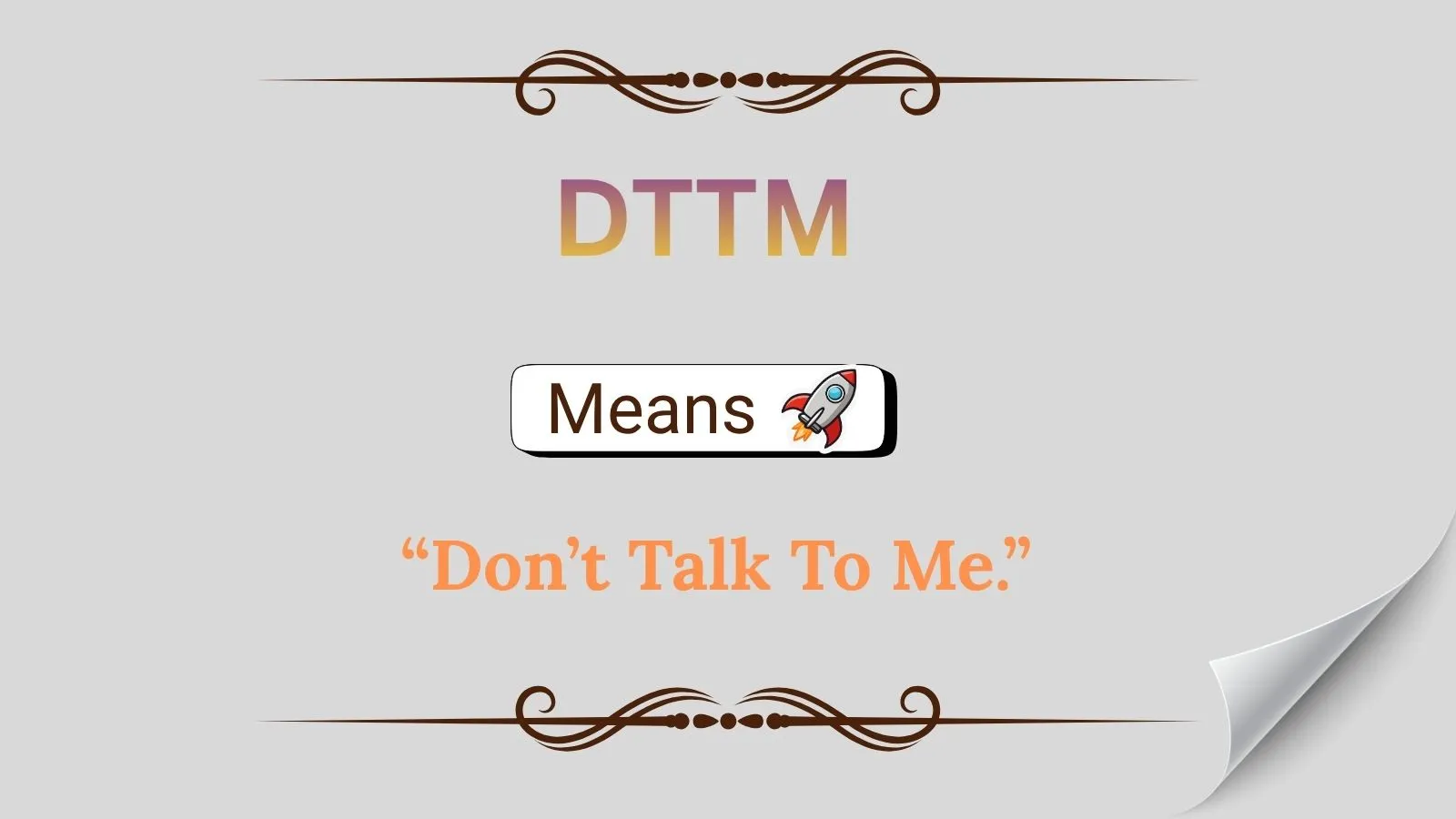
In its most common modern usage, DTTM stands for “Don’t Talk To Me.” This is widely used in texting, online messaging, gaming chats, and social media.
It conveys irritation, frustration, or a desire to end the conversation immediately. When used casually between friends, it may even be playful, depending on tone and context.
Outside of casual communication, DTTM also appears as a short form for “Date-Time” in professional fields like data management, computing, aviation, and medical entries. In these areas, it represents a timestamp used for precise recordkeeping, scheduling, or logging events.
Because the abbreviation covers both emotional expression and technical terminology, understanding the surrounding context is essential to interpret the correct meaning.
Background
Abbreviations like DTTM developed as people sought faster ways to communicate across digital platforms. Early chat rooms and SMS messaging encouraged short forms to save time and typing effort.
As online discussions evolved, so did the need for quick emotional responses, leading to shorthand phrases like “Don’t Talk To Me.”
In professional and scientific environments, the push toward compact digital logging systems also gave rise to abbreviations. The term DTTM (as Date-Time) became a standardized variable in many data-driven industries, helping systems label events with precise timestamps.
This blend of casual and technical roots is the reason the abbreviation now holds multiple interpretations.
Usage in Different Contexts
Everyday Chat & Online Messaging
In casual conversation, DTTM is usually meant as:
- A sign of anger or annoyance
- A request for space
- A joking phrase during friendly banter
Tone matters heavily here.
Social Media Platforms
On apps like Instagram, TikTok, or X (formerly Twitter), people use DTTM to:
- Express frustration in captions
- Set boundaries
- Add emphasis during emotional posts
- React to comments or trending topics
Professional Fields
In technical environments, DTTM nearly always refers to a timestamp value:
- Databases: DTTM fields store precise date and time information
- Software development: Used for logging change histories
- Business analytics: Helps track events in chronological order
This version of the acronym is neutral, data-focused, and standardized.
Meaning in Chat, WhatsApp, Instagram, TikTok
Across messaging platforms, DTTM = Don’t Talk To Me in nearly all informal cases.
Examples:
- “I’m so tired today… dttm.”
- “If he keeps doing this, dttm.”
- “Dttm😂 I’m done with this drama.”
It may display real emotion or playful exaggeration. Emojis often clarify the mood.
Meaning in Physics, Medical, and Aircraft Terminology
Physics
While not extremely common, DTTM can appear in scientific logs to represent Date-Time Measurements—a shorthand used when recording experimental events or sensor data.
Medical Field
Medical systems sometimes use DTTM to label:
- Patient record timestamps
- Medication administration timing
- Procedure logging
It ensures accuracy in chronological documentation.
Aircraft & Aviation
In aviation, DTTM represents:
- Flight event timestamps
- Cabin or cockpit logs
- Maintenance tracking
- Navigation system data entries
The abbreviation helps pilots and engineers maintain precise, time-based records.
Common Misconceptions
- It always means Don’t Talk To Me
– Not true. Many people assume it’s emotional slang, but technical fields use it differently. - It’s rude by default
– Intent varies. With emojis or humor, it can be playful. - It’s a new abbreviation
– DTTM has been around in technical documentation for years before trending online. - It has a single universal meaning
– Context fully determines interpretation.
Similar Terms & Alternatives
Depending on the intention, users may replace DTTM with:
In chat:
- “Leave me alone”
- “Not now”
- “BRB” (Be Right Back)
- “I need space”
In professional fields:
- “DT” or “TS” (Timestamp)
- “DATETIME”
- “UTC time”
- “Log time”
These alternatives help avoid ambiguity when clarity is required.
How to Respond to It
Your response depends entirely on the context and relationship:
If emotional or serious:
- “Okay, I’ll give you some space.”
- “Let me know when you’re ready to talk.”
If playful:
- “😂 Fine, I won’t bother you.”
- “Alright, drama queen!”
If technical:
- “Got it, updating the DTTM field now.”
- “Please confirm the correct timestamp.”
Always read the tone first.
Differences From Similar Words
DTTM vs. DT (Date-Time):
DTTM is more specific and appears as a field label in various databases, while DT is more general.
DTTM vs. DTM (Don’t Text Me):
DTM or DTM is emotional but lacks the stronger tone of DTTM.
DTTM vs. AFK (Away From Keyboard):
AFK is neutral; DTTM in chat suggests frustration.
DTTM vs. GMT/UTC:
Technical timestamps like GMT/UTC refer to global time standards, whereas DTTM simply labels the date-time entry.
Relevance in Online Conversations & Dating Apps
Dating app conversations often include short abbreviations to express feelings quickly. DTTM appears when:
- Someone is annoyed with a match
- Responding after a misunderstanding
- Expressing boundaries
- Posting emotional status updates
Because tone can be misinterpreted easily, it’s a good idea to clarify intentions when using abbreviations like this.
In online conversations overall, DTTM signals either emotional distancing or a need for technical precision, depending on the context.
Conclusion
The abbreviation DTTM carries multiple meanings that change depending on how and where it’s used. In everyday messaging, it typically expresses irritation or a desire for space. On social media, it can be emotional, dramatic, or humorous.
In technical fields such as aviation, medicine, and data management, it becomes a practical tool representing date-time information. Recognizing the right meaning requires paying attention to tone, platform, and situation.

I’m Jonathan Franzen, author at GrammarsGuide.com, where I create thoughtful, clear, and engaging writing content.
I use my experience to make complex English ideas easy to understand and apply in everyday reading and writing.