Hey, I want to share something that happened to me recently about “Ish” meaning in text.
I was chatting with a friend when I suddenly saw this term pop up, and honestly, I had no clue what it meant at first.
I kept wondering, “Am I missing something here?” It was a bit confusing, and I didn’t want to respond the wrong way.
So, I decided to look into “Ish” and figure out its meaning and context. After understanding it, I realized how important it is to know these terms to avoid awkward moments in conversations.
I handled it by learning the proper meaning and responding confidently, and now I feel ready whenever I see “Ish” again in chats or on social media.
Meaning & Definition
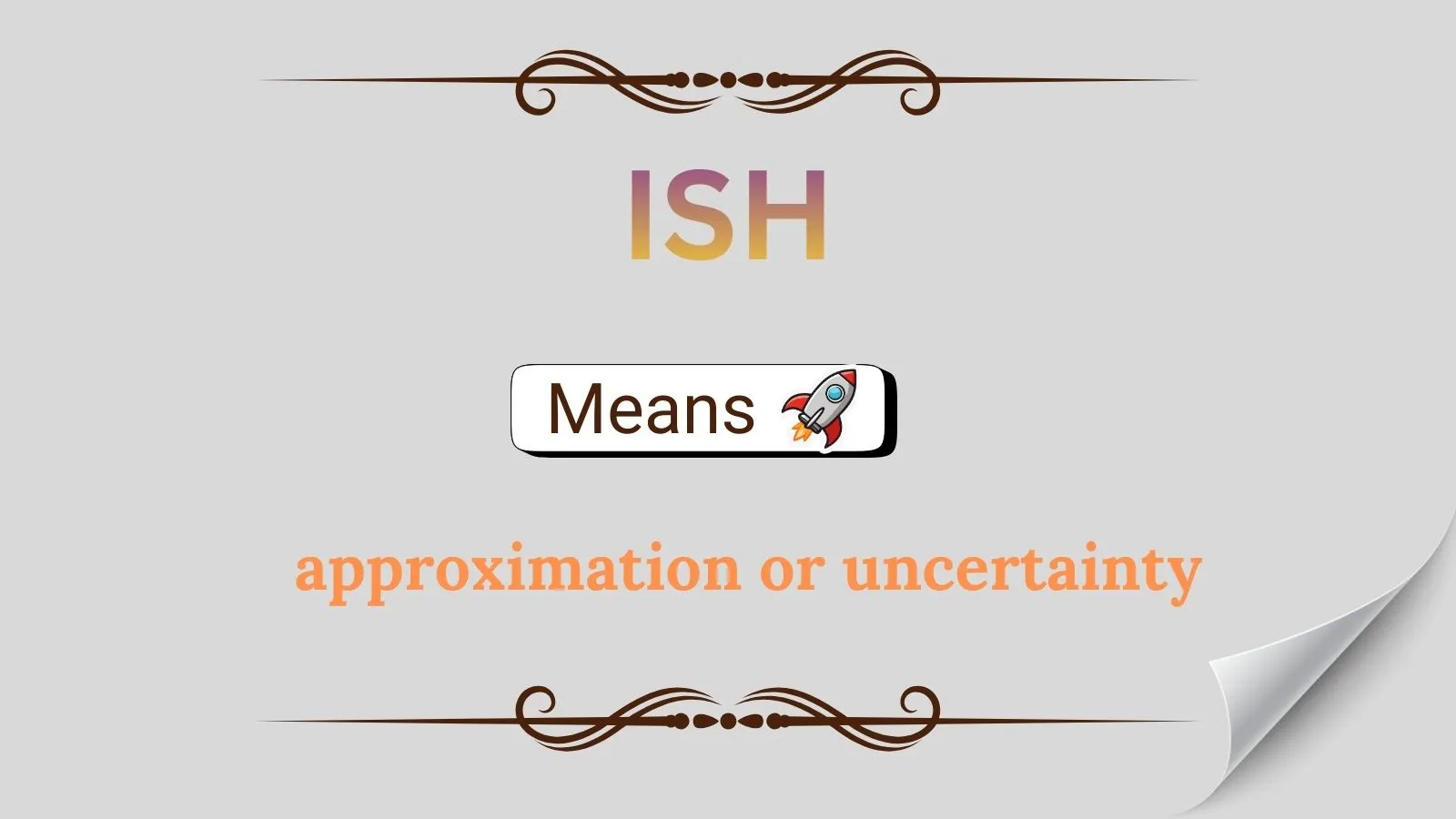
The ish meaning in text generally refers to approximation or uncertainty. It is used to soften a statement, indicate something is “kind of” true, or express a non-absolute response. Rather than giving a firm yes or no, “ish” creates a middle ground.
For example, when someone says, “I’m ready-ish,” it suggests they are almost ready but not completely.
The word acts as a linguistic buffer, reducing the intensity or finality of a statement. In text communication, where brevity is valued, “ish” efficiently conveys nuance that might otherwise require a longer explanation.
“Ish” can also communicate emotional ambiguity. In responses like “Happy-ish,” it may imply mixed feelings—part happiness, part doubt or dissatisfaction.
This flexibility makes it popular in informal conversations, particularly among younger users.
Importantly, “ish” is not tied to a single emotion or meaning. Its interpretation depends heavily on context, tone, and relationship between the speakers.
That’s why understanding the ish meaning in text requires looking beyond the word itself and focusing on how and where it’s used.
Background
The origins of “ish” trace back to Old English, where it functioned as a suffix meaning “belonging to” or “having the nature of.”
Over time, its usage evolved, especially in spoken English, to express approximation—such as “sixish” meaning “around six.”
With the rise of texting and online communication, “ish” detached itself from strictly being a suffix and became a standalone expression.
Digital culture accelerated this shift, favoring short, adaptable words that convey tone quickly.
The ish meaning in text reflects how language evolves in response to communication technology.
In fast-paced digital exchanges, people often avoid definitive statements. “Ish” allows speakers to hedge their responses without sounding evasive or rude.
Social media platforms further normalized its use. As casual writing replaced formal grammar online, “ish” became acceptable—even expected—in everyday digital speech.
Today, it represents a blend of historical language evolution and modern communication needs.
Usage in Different Contexts (Chat, Social Media, Professional Fields)
In casual chat, the ish meaning in text is relaxed and expressive. Friends use it to show uncertainty, humor, or mild reluctance. For example, “I liked the movie… ish” suggests a mixed opinion without negativity.
On social media, “ish” adds personality to captions and comments. It helps users sound relatable and authentic.
A post saying “Living my best life-ish” communicates self-awareness and humor rather than arrogance.
In professional settings, usage is more limited. While “ish” can appear in informal internal messages, it’s generally avoided in formal emails or reports.
However, in creative industries or relaxed workplaces, it may be used to soften deadlines or expectations, such as “The draft is finished-ish.”
Context determines appropriateness. While it enhances friendliness and flexibility, overuse in professional communication can appear vague or uncommitted.
Meaning in Chat, WhatsApp, Instagram, TikTok
In chat and messaging apps like WhatsApp, the ish meaning in text often signals hesitation or partial agreement. Responses such as “Sure-ish” suggest openness without full commitment.
On Instagram, “ish” is commonly used in captions to downplay perfection or show humor. It aligns with the platform’s culture of curated authenticity.
On TikTok, where trends and sarcasm dominate, “ish” is frequently used to exaggerate relatability. Creators use it to imply irony or emotional complexity, often paired with visual cues.
Across platforms, “ish” acts as a tone modifier, shaping how messages are emotionally received rather than altering factual meaning.
Meaning in Physics, Medical, and Aircraft Terminology
Outside casual text, “ish” has different implications. In physics and engineering discussions, “ish” may be used informally to indicate approximation, such as “zero-ish friction.” However, it is not suitable for formal documentation.
In medical contexts, professionals avoid “ish” due to the need for precision. Patients, however, may use it when describing symptoms, like “pain is mild-ish,” indicating uncertainty.
In aviation or aircraft terminology, “ish” is strictly informal and typically avoided in official communication.
Safety-critical fields rely on exact language, making “ish” unsuitable except in casual conversation.
Common Misconceptions
A common misconception is that “ish” means dishonesty or indecision. In reality, the ish meaning in text reflects nuance, not avoidance. It often shows honesty about uncertainty rather than false confidence.
Another misconception is that it’s always negative. While it can signal doubt, it can also express humor, flexibility, or emotional openness.
Similar Terms & Alternatives
Words similar to “ish” include kind of, sort of, roughly, approximately, and almost. Each carries a slightly different tone, but none match the brevity and casual feel of “ish.”
Emojis or phrases like “I guess” or “maybe” can serve as alternatives, though they may change the emotional tone of the message.
How to Respond to It
Responding to “ish” depends on intent. If clarity is needed, ask a follow-up question. If the tone is casual, matching it with humor or understanding keeps the conversation flowing.
For example, replying “What part is still ish?” invites explanation without pressure.
Differences from Similar Words
Unlike “maybe,” which implies uncertainty, the ish meaning in text suggests partial truth. Unlike “almost,” it carries emotional nuance rather than factual proximity.
“Ish” is more flexible and conversational than its alternatives.
Relevance in Online Conversations & Dating Apps
In dating apps, “ish” is especially significant. Responses like “I’m interested-ish” may signal curiosity without commitment. It helps users express emotions safely in early interactions.
Understanding its meaning prevents misreading interest levels and emotional intent.
Conclusion:
The ish meaning in text reflects how modern communication values nuance, flexibility, and emotional honesty.
Though small, the word carries layered meaning shaped by context, platform, and relationship dynamics.
From casual chats to social media and dating apps, “ish” allows people to soften statements and express uncertainty without negativity.
While it’s best avoided in formal or technical communication, it remains a powerful tool in everyday digital language.
Understanding how and why people use “ish” helps improve clarity, empathy, and connection in online conversations.

I’m Toni Morrison, author at GrammarsGuide.com, where I create clear, insightful, and meaningful writing content.
I use my understanding of language to make complex English rules resonate and come alive in everyday reading and writing.