I was texting my friend the other day when I suddenly saw them type “oof”. At first, I wasn’t sure what it meant, and honestly, I felt a little confused.
I had never really paid attention to this tiny word before, but in that moment, I realized it could mean so many things depending on the situation. Was it surprise, disappointment, or just a funny reaction?
I decided to ask my friend and handle it the way I always do with unfamiliar slang—I observed, asked for context, and replied with understanding.
By doing this, I not only learned the true meaning of “oof” in text but also made sure our conversation stayed smooth and friendly. It was a small moment, but it taught me how important these little expressions can be in chats.
Meaning & Definition
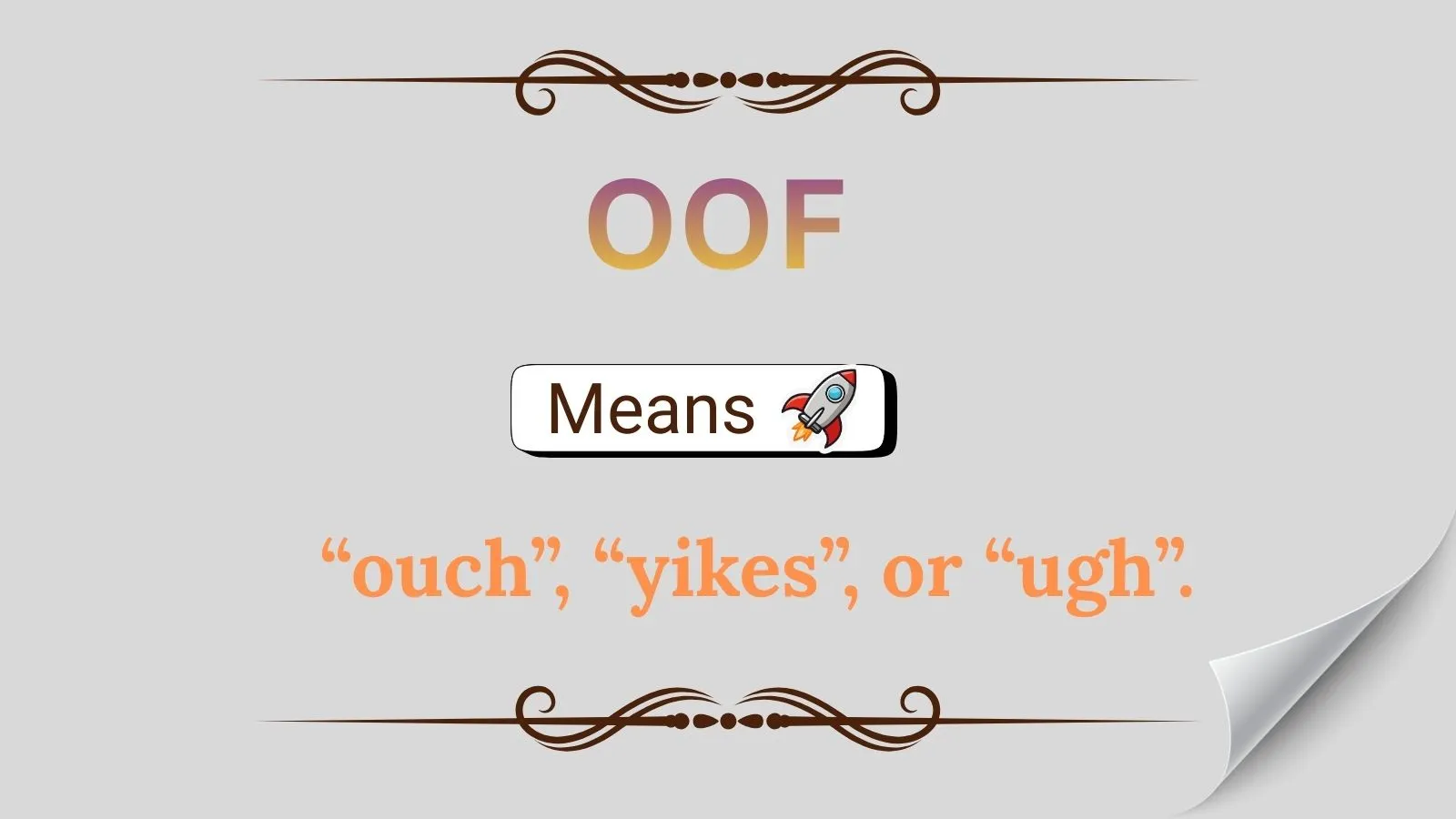
The word “oof” is an informal interjection used to express a reaction to something unpleasant, surprising, or awkward. It’s similar to saying “ouch”, “yikes”, or “ugh”. While it is short and simple, its versatility makes it popular in digital communication.
People use “oof” when they want to show sympathy, share mild shock, or acknowledge a mistake. Unlike formal language, it carries a casual, humorous tone, which makes it widely accepted in informal chats and social media interactions.
Background
“Oof” gained popularity in online gaming communities, particularly from the sound effect used in the game Roblox when a character dies or gets hurt.
Over time, this onomatopoeic sound transitioned into text-based conversations to convey frustration or empathy. Its usage has since expanded beyond gaming, appearing in memes, social media posts, and everyday texting culture.
Linguists note that “oof” is part of a growing trend where sounds and short expressions replace longer sentences for efficiency and relatability in digital communication.
Usage in Different Contexts
Chat & Messaging Apps
On platforms like WhatsApp, Messenger, or Telegram, “oof” is often typed in response to a friend’s unfortunate situation, such as failing an exam or missing an event.
It expresses a mix of sympathy and mild humor, making the conversation lighthearted while acknowledging the mishap.
Social Media
Instagram, TikTok, and Twitter users frequently use “oof” in captions or comments to react to content, whether it’s a funny video, a cringe moment, or an unexpected turn of events. Memes often incorporate it to exaggerate awkward or relatable situations.
Professional Fields
While less common in formal business communication, “oof” can appear in casual professional messaging, such as team chats on Slack, when acknowledging minor setbacks or light-hearted mistakes. Its casual tone requires discretion to avoid appearing unprofessional in formal emails.
Meaning in Chat, WhatsApp, Instagram, TikTok
On messaging platforms, “oof” is shorthand for expressing empathy, shock, or disappointment.
For example, if a friend says, “I forgot my homework”, responding with “oof” communicates understanding without needing a lengthy reply.
On TikTok and Instagram, it often accompanies reaction videos or comments that highlight humorous or awkward moments. Its brevity makes it highly adaptable for fast-paced online interactions.
Meaning in Physics, Medical, and Aircraft Terminology
Although “oof” is mostly used in casual digital contexts, in specialized fields like physics, medicine, or aviation, the term rarely appears as formal jargon.
In these areas, “OOF” can sometimes be an acronym—such as Out of Focus in optics or Out of Fuel in aviation—but these are context-specific and unrelated to the casual text meaning.
Recognizing the difference between casual slang and technical terms is essential to avoid confusion.
Common Misconceptions
Many people assume “oof” always implies pain or negative emotion, but it can also signal mild amusement or a humorous acknowledgment of an awkward situation.
Others mistake it for an angry or aggressive reaction, but the tone is typically lighthearted. Context is key in interpreting the meaning correctly.
Similar Terms & Alternatives
Words similar to “oof” include:
- Ouch
- Yikes
- Uh-oh
- Whoops
- Dang
These expressions vary slightly in tone but serve similar purposes: reacting to an unexpected or undesirable situation.
How to Respond to It
When someone types “oof”, you can respond in several ways:
- Empathize: “Yeah, that’s rough!”
- Humor: “Classic!”
- Sympathy: “Hope things get better!”
The response depends on the tone of the conversation and the relationship between participants.
Differences from Similar Words
Unlike “ouch”, which conveys physical pain, “oof” often reflects emotional or situational discomfort. Compared to “yikes”, “oof” can be more sympathetic rather than judgmental. Understanding these subtle differences ensures more precise communication online.
Relevance in Online Conversations & Dating Apps
In online chats and dating apps, “oof” allows users to react quickly without breaking the conversational flow.
It adds relatability and casualness to interactions, helping build rapport in text-based communication. Its brevity and humor make it ideal for informal digital spaces where quick, expressive responses are valued.
Conclusion:
“Oof” has become a staple in modern digital communication, bridging gaming culture, social media, and everyday texting.
It conveys empathy, humor, and mild frustration in a concise and relatable way. Understanding its meaning and context helps navigate online conversations effectively, whether on messaging apps, social media, or casual professional platforms.
As communication continues to evolve, expressions like “oof” highlight the playful and efficient ways people express emotions in text. By mastering its use, you can enhance your online interactions and stay connected with digital trends.

I’m Jonathan Franzen, author at GrammarsGuide.com, where I create thoughtful, clear, and engaging writing content.
I use my experience to make complex English ideas easy to understand and apply in everyday reading and writing.