If you’ve ever come across the term “OSS” in a text message or online conversation, you may have wondered what it actually means. Abbreviations and internet slang are everywhere today, especially in texting, social media, and online communities.
Because people prefer quick and short messages, many phrases get shortened into acronyms like “OSS,” which can sometimes create confusion for those who are unfamiliar with them.
People often search for “OSS meaning in text” when they see the term on platforms like WhatsApp, Instagram, TikTok, or in online chats and are unsure how to interpret it. Interestingly, OSS does not have only one meaning.
Its definition can vary depending on the context in which it is used. In casual messaging, it may represent agreement or acknowledgment, while in professional fields it can refer to completely different technical terms.
This article explains the meaning of OSS in text, its background, how it is used across social media and professional industries, common misunderstandings, and how you should respond when someone uses it in conversation.
Meaning & Definition
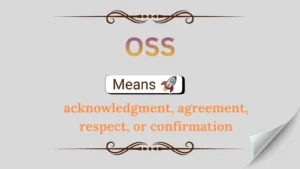
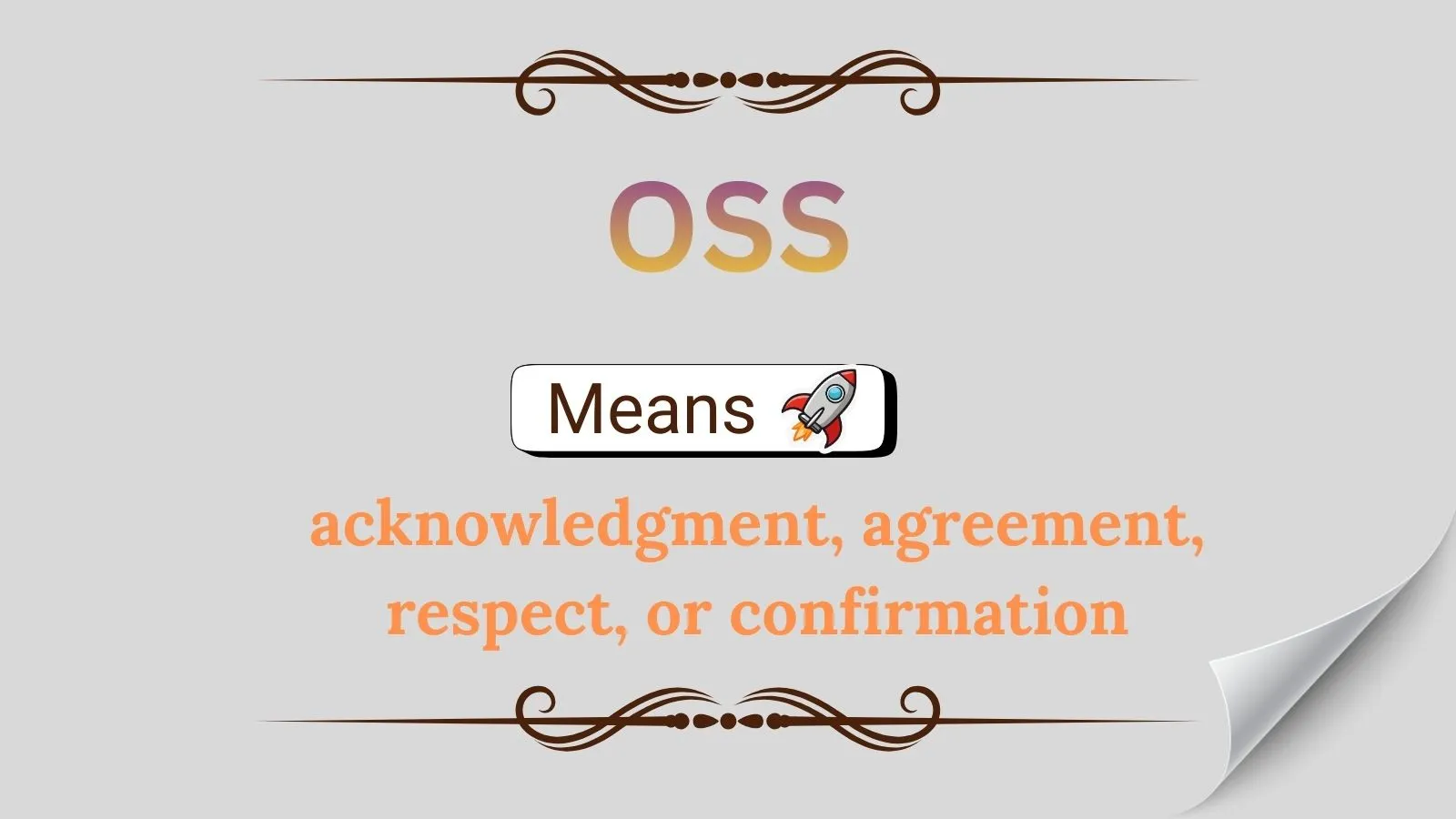
In texting and online communication, OSS is commonly used as a short expression that shows acknowledgment, agreement, respect, or confirmation. It is often similar to saying “okay,” “got it,” or “understood.”
The term originally comes from martial arts culture, where practitioners say “oss” to express respect, discipline, or agreement with an instructor.
Over time, the word moved beyond martial arts and started appearing in casual digital communication.
When used in text messages, OSS generally means:
- I understand
- I agree
- Message received
- Respect or acknowledgment
For example:
- “Practice starts at 6 PM.”
“OSS, I’ll be there.” - “Make sure you send the report tonight.”
“OSS.”
In these situations, the sender is simply confirming that they understand the message. The tone is usually respectful and straightforward.
Because texting culture favors short responses, acronyms like OSS help people communicate quickly without writing long replies.
Background of OSS
The word “oss” has deep roots in Japanese martial arts culture, especially in disciplines like karate, judo, and Brazilian jiu-jitsu. It is often spoken by students when greeting instructors, acknowledging instructions, or showing determination during training.
The exact linguistic origin is debated, but many experts believe it comes from the Japanese phrase “osu no seishin,” which roughly translates to perseverance, patience, and respect.
In traditional martial arts schools, students might say “oss” in several situations:
- Greeting instructors or classmates
- Confirming instructions during training
- Showing determination or effort
- Expressing respect
As martial arts became popular worldwide, the term spread beyond training halls into online communities and everyday speech.
With the rise of social media and messaging apps, people started using OSS in text messages as a quick acknowledgment, similar to other short replies like “ok,” “kk,” or “got it.”
Today, OSS is recognized both as a cultural expression from martial arts and as an informal communication shortcut in digital conversations.
Usage in Different Contexts
The meaning of OSS can change depending on where it is used. While it is commonly seen in casual messaging, it also appears in professional or technical environments with completely different definitions.
Casual communication
In everyday texting, OSS simply acts as a confirmation or acknowledgment.
Example:
- “Don’t forget the meeting tomorrow.”
“OSS.”
Martial arts communities
In training environments, the term reflects discipline, respect, and perseverance. It is not just a word but a cultural expression that reflects a student’s attitude.
Technical fields
In professional contexts, OSS may represent abbreviations related to technology, engineering, or aviation.
Because the meaning changes depending on context, it’s always important to consider the conversation topic before interpreting the term.
Meaning in Chat, WhatsApp, Instagram, and TikTok
On modern social platforms, OSS is mostly used as a short reply.
In chat messages
People use it to confirm that they received a message.
Example:
- “Send me the document tonight.”
“OSS.”
On WhatsApp
It may appear in group chats when someone acknowledges instructions or plans.
Example:
- “Everyone meet at the restaurant at 8.”
“OSS 👍”
On Instagram
Sometimes users comment “OSS” on posts related to martial arts, fitness, or discipline as a sign of respect.
On TikTok
It often appears in videos about martial arts training, where viewers comment “OSS” to show appreciation or solidarity with the creator.
Overall, in social media culture, the meaning is usually respect, agreement, or acknowledgment.
Meaning in Physics, Medical, and Aircraft Terminology
Outside of texting culture, OSS can represent technical terms in specialized fields.
In technology and computing
OSS commonly stands for Open Source Software, which refers to software whose source code is publicly available for modification and distribution.
In telecommunications
It can refer to Operations Support System, a framework used by telecom companies to manage network operations.
In aviation
In aircraft systems or logistics, OSS may refer to Operational Support Systems, which help manage maintenance, scheduling, or technical operations.
In medical contexts
Although less common, OSS may appear as an abbreviation for specific medical terminology depending on documentation or institutional standards.
These meanings are typically used in professional discussions rather than casual texting.
Common Misconceptions
Because OSS has multiple meanings, misunderstandings can easily occur.
One common misconception is that it always refers to open source software. While that is true in technology discussions, it does not apply to casual text messages.
Another misunderstanding is assuming that OSS is a universal slang abbreviation. In reality, it is still more common among martial arts communities and certain online groups than among the general public.
Some people also confuse OSS with other abbreviations like “OOS” or “OS.” These terms have entirely different meanings.
Understanding the context of the conversation helps avoid confusion.
Similar Terms & Alternatives
There are many other short responses people use instead of OSS in text messages.
Common alternatives include:
- OK
- Got it
- Roger
- Copy
- Noted
- Understood
- Sure
These expressions serve the same purpose: confirming that a message has been received and understood.
The difference is that OSS carries a slightly more respectful or disciplined tone, especially among martial arts practitioners.
How to Respond to OSS
If someone replies OSS to your message, it usually means they understood what you said.
You can respond normally depending on the conversation.
For example:
- “OSS.”
“Great, see you there.”
Or simply continue the discussion without addressing the acknowledgment directly.
If you receive it in a martial arts context, responding with “OSS” back can be a sign of mutual respect.
Differences from Similar Words
Although OSS can mean acknowledgment, it differs slightly from similar words.
OK: Neutral confirmation.
Roger: Often used in military or radio communication.
Copy: Indicates message received.
OSS: Carries a tone of discipline, respect, or cultural tradition.
Because of this nuance, OSS may feel more formal or respectful in certain communities.
Relevance in Online Conversations & Dating Apps
In online communication, short responses are extremely common. People often use quick replies like “ok,” “kk,” or “got it” to keep conversations moving.
OSS sometimes appears in these contexts, especially among users who are familiar with martial arts culture or internet slang communities.
On dating apps, it may simply function as a quick acknowledgment, although it is less common than typical responses like “okay” or “sure.”
Because slang evolves quickly, newer users may occasionally encounter unfamiliar abbreviations like OSS and search online to understand them.
Conclusion:
The meaning of OSS in text depends largely on the context in which it appears. In most casual messaging situations, it simply acts as a short way to say “I understand,” “okay,” or “message received.” The term originally comes from Japanese martial arts culture, where it represents respect, discipline, and perseverance.
As communication has moved online, many traditional expressions have been adapted into digital slang. OSS is one example of a word that transitioned from a cultural tradition into modern texting and social media language.
However, OSS can also appear in technical fields such as software development, telecommunications, and aviation, where it represents completely different professional terms. Understanding the surrounding conversation helps determine the correct meaning.
Whether used in martial arts communities, social media, or messaging apps, OSS remains a concise way to acknowledge a message while maintaining a tone of respect and clarity.

I’m Mark Twain, author at GrammarsGuide.com, where I create clear, simple, and practical writing content.
I use my know-how to make tricky English rules easy to understand and useful in everyday writing.