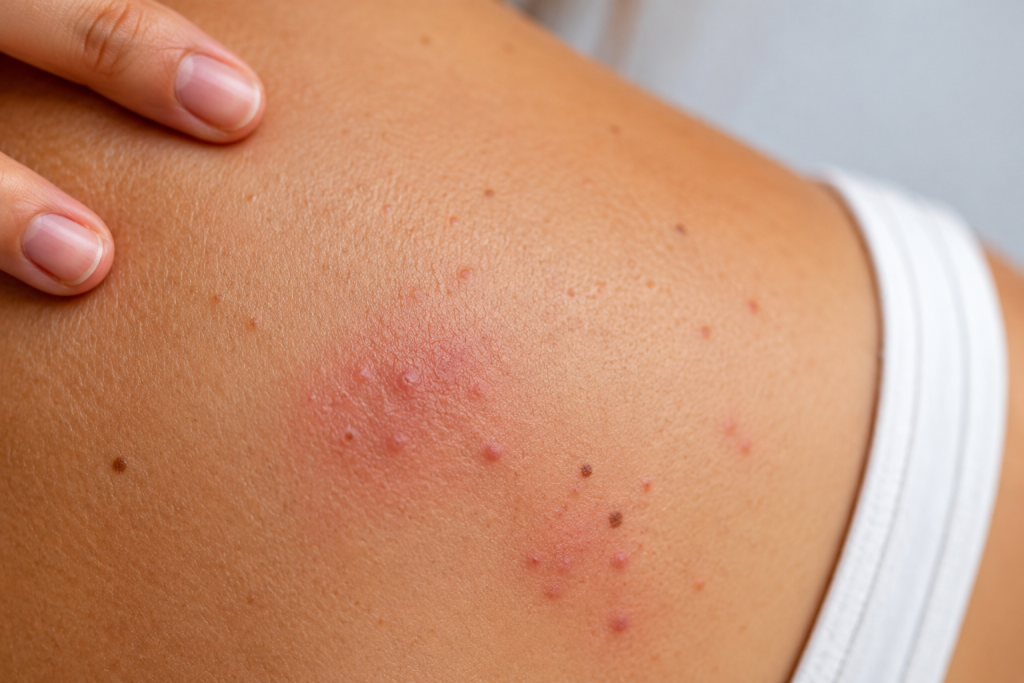
This blog answers the real question most people are searching when something unexpected shows up on their skin: do I go to urgent care, wait for a dermatologist, or is this an emergency? It breaks down what standard urgent care can and cannot do for skin conditions, which symptoms warrant same-day attention, and why a practice that combines dermatology urgent care with actual dermatology expertise is the smarter first stop for most skin concerns.
The Wait Is the Problem
Something shows up on your skin. It might be a rash that appeared overnight, a bug bite that looks angrier than it should, or a mole you swear was not there last month. Your first instinct is to call a dermatologist but when you find out the next available appointment is six weeks out it becomes a problem.
For anyone dealing with a skin concern that feels time-sensitive, dermatology urgent care exists precisely because that six-week wait is not always acceptable. The nationwide average wait to see a dermatologist runs four to six weeks, and for new patients in busier markets it can stretch considerably longer. .
What Standard Urgent Care Can Actually Do for Skin
A general urgent care clinic can handle more than most people expect. Bacterial skin infections, allergic rashes, poison ivy reactions, minor burns, infected bug bites, and conditions like impetigo or shingles are all within scope.
If you have a spreading infection with fever, warmth, and redness, that is exactly the kind of situation where a walk-in urgent care visit makes sense. They can prescribe antibiotics, topical treatments, and antivirals and get you moving in the right direction quickly.
General urgent care providers are trained broadly across many systems, and skin is one small part of that. Many common rashes look nearly identical to each other and to more serious conditions requiring a completely different treatment approach.
When the diagnosis is uncertain, urgent care commonly refers the patient to a dermatologist anyway, which means two visits, two copays, and more time before anything actually resolves.
When a Bite or Rash Needs Attention the Same Day
Not every skin issue needs to be seen urgently, but some absolutely do. A bug bite that is expanding in a bullseye pattern, developing pus, or accompanied by fever is not something to watch and wait on.
For suspicious spots and moles, the timeline is different but the stakes can be just as high. A mole that changes in size, shape, or color warrants evaluation without a long wait.
Asymmetry, irregular borders, multiple colors, a diameter larger than a pencil eraser, or any spot that bleeds or itches without explanation are all reasons to get a professional opinion sooner rather than later. Skin cancer is highly treatable when caught early, and sitting on a six-week wait when something looks genuinely off is not a reasonable plan.
Why a Dermatology-Specific Urgent Care Changes the Equation
A dermatologist can perform a biopsy on a suspicious lesion the same day. They can distinguish between contact dermatitis and early cellulitis, between a harmless sebaceous cyst and something that needs follow-up, between a standard allergic rash and a drug reaction requiring a completely different course of action.
A practice built around same-day dermatology urgent care makes it so that the person evaluating your skin is actually trained in skin medicine, not working from a general clinical protocol.
Spots That Look Fine Until They Do Not
One of the more frustrating realities of skin health is that some concerning conditions do not announce themselves clearly. A patch of squamous cell carcinoma can look like rough, dry skin that never quite heals. Anyone over forty who notices a new spot that does not fit the pattern of what has always been there should take it seriously, not because every new spot is cancer, but because early evaluation costs almost nothing while treating something ignored too long costs considerably more.
The same logic applies to rashes that do not clear up. If a rash persists beyond two weeks despite over-the-counter treatment, it is not going to resolve on its own. At that point the antihistamine is managing symptoms while something treatable goes undiagnosed underneath.
The Smarter First Call
For skin concerns that cannot wait but are not a medical emergency, the best first call is a practice that handles both urgent skin needs and full dermatological care under one roof.
At a Cosmetic Dermatology & Laser Center in Los Angeles like Skinpeccable, physician-led dermatology is the foundation of every visit. When something unexpected shows up on your skin and you need a real answer without a long wait, you are not forced to choose between weeks of delay or a general provider’s best guess.
FAQ
Can a rash be a sign of something other than a skin condition?
Yes, and this catches people off guard more often than it should. Certain medications cause drug rashes that look like allergic reactions. Viral infections like mono or roseola produce characteristic skin patterns. Autoimmune conditions like lupus often show up on the skin before other symptoms appear.
How do I know if a bug bite is infected or just reacting normally?
Normal bite reactions peak within 24 to 48 hours and then gradually improve. An infected bite moves in the opposite direction, with increasing redness, warmth, swelling, and sometimes pus or red streaking moving away from the site. Fever alongside a bite reaction is always a reason to be seen the same day rather than monitored at home.
Is it worth going to urgent care for a mole I am worried about?
A general urgent care clinic is not the right first stop for mole evaluation. They can note the concern and write a referral, but they cannot biopsy the lesion or give you a diagnostic opinion with any real confidence.
What if my rash keeps coming back after treatment?
A rash that returns after treatment almost always means either the underlying cause was not correctly identified or the treatment was not matched to the right condition.
Should I take photos of a suspicious spot before my appointment?
Yes, and it is more useful than most people realize. Changes over time are one of the most important factors in evaluating any suspicious spot, and a photo from weeks or months earlier gives the dermatologist a meaningful comparison point.