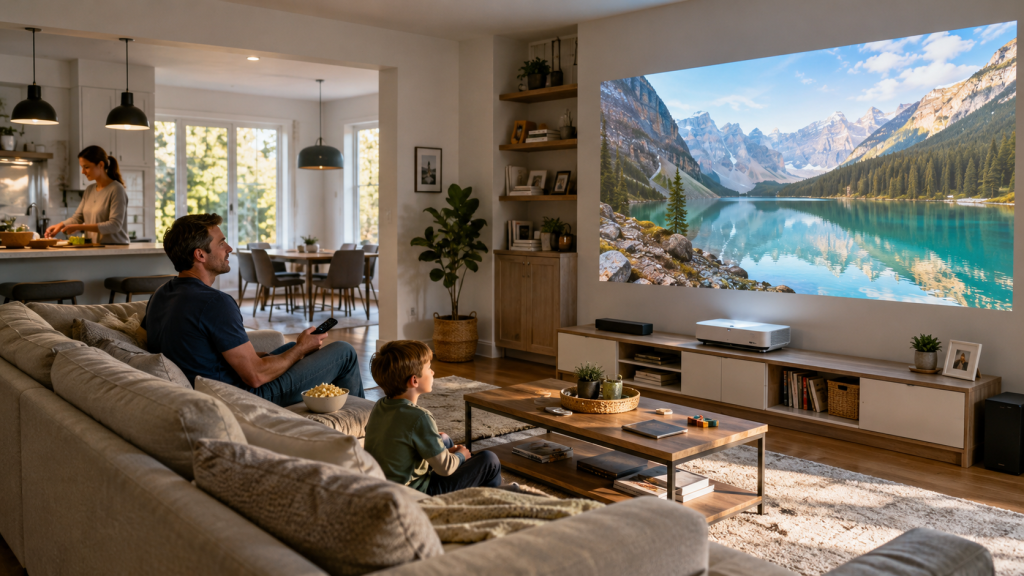
Home entertainment no longer belongs to a single time of day. A living room screen may be used for morning workouts, afternoon sports, after-school cartoons, evening streaming, late-night gaming, and weekend family movies. That variety changes what people should expect from an entertainment setup.
An all-day entertainment room needs to be simple, durable, and adaptable. It should not require perfect darkness, complicated controls, or a different furniture arrangement for every activity. Instead, it should support the way people naturally move through the day.
The best setup is not necessarily the one that creates the most dramatic movie-night demonstration. It is the one that remains useful when the room is bright, busy, quiet, crowded, or relaxed. When the technology fits those changing conditions, the entertainment space becomes part of everyday life rather than a feature reserved for special occasions.
Start With Real Use Cases
Before choosing equipment, write down how the room is actually used. Does someone exercise with video classes before work? Do kids stream shows after school? Are sports usually watched with friends? Is gaming part of the routine? These answers matter because they shape brightness needs, sound choices, input access, and seating.
A projector for all-day entertainment needs to be judged by more than one perfect demo scene. It should be useful across different content types and lighting conditions. The best setup is the one that performs consistently when the room is busy, bright, quiet, crowded, or relaxed.
Reduce Friction Wherever Possible
The more often a room is used, the more important convenience becomes. A system that feels impressive but slow to start will gradually be avoided. Simple source switching, reliable connectivity, and an easy remote experience can matter as much as headline specs.
This is one reason UST layouts are appealing in everyday spaces. A UST laser projector can keep the hardware near the screen wall, which may simplify placement and reduce the need for ceiling mounts or long cable runs. For many households, that makes the setup feel more approachable.
Design for Mixed Lighting
All-day use means mixed lighting. Morning sun, afternoon glare, evening lamps, and nighttime darkness all create different conditions. Instead of pretending the room will always be controlled, design for change. Window treatments, screen choice, and lamp placement can help the image stay comfortable.
It also helps to create a few simple lighting modes. Bright for cleaning and socializing. Soft for sports and casual streaming. Darker for films. These modes do not need to be complicated; even a few lamps on smart plugs or dimmers can make the room feel more flexible.
Keep Audio Clear at Different Volumes
All-day entertainment does not always mean loud entertainment. A morning workout may need energetic music. An afternoon sports event may need clear commentary and crowd sound. A late-night show may need understandable dialogue at a low volume. A family movie may need enough power to feel immersive without overwhelming the room.
Good audio planning makes the system more useful across all of these situations. Dialogue should remain clear from the seats people use most often. Bass should add impact without rattling furniture during casual viewing. Volume should feel reasonably balanced throughout the room.
Speaker placement matters as much as maximum output. A system that is loud near one seat but difficult to hear from another will not feel flexible. Testing the audio from the sofa, floor seating, and nearby dining area can reveal problems that are not obvious from the central position.
Choose a Setup People Can Maintain
Daily-use spaces collect dust, fingerprints, moved furniture, snack crumbs, and changing habits. The equipment and layout should be easy to clean, inspect, and reset. A setup that only works when everything remains perfectly arranged will quickly become frustrating.
Cables should be hidden where possible but remain accessible when a device needs to be replaced or reconnected. Streaming players, consoles, controllers, and remotes should have obvious places to live. Frequently used ports should not be buried behind heavy furniture.
Ventilation also matters. Projectors, consoles, streaming devices, and audio equipment may produce heat during long sessions. Placing them inside tightly closed cabinets can affect performance and make maintenance more difficult. Storage should look tidy while still allowing enough airflow around the equipment.
Durability Matters More Than It Sounds
All-day entertainment means repeated use by different people. Someone may start a workout before coffee. Someone else may stream music videos while cleaning. Children may use the room for cartoons, and adults may return to it for a film later. The equipment and layout should tolerate that normal messiness.
This is where practical design becomes part of performance. Surfaces should be easy to dust. Devices should not overheat in closed storage. Cables should not be pulled every time furniture moves. A room that is durable and simple will usually deliver more value than one that is technically impressive but fragile in daily use.
It can help to think of the entertainment wall as a household utility rather than a special occasion feature. The more tasks it supports, the more practical the investment becomes. A screen used only twice a month has to justify itself through big moments; a screen used throughout the week earns its place through convenience.
That mindset leads to better choices. Instead of asking what looks most impressive in a demo, ask what will be easiest to live with after six months. All-day entertainment is about consistency, not spectacle.