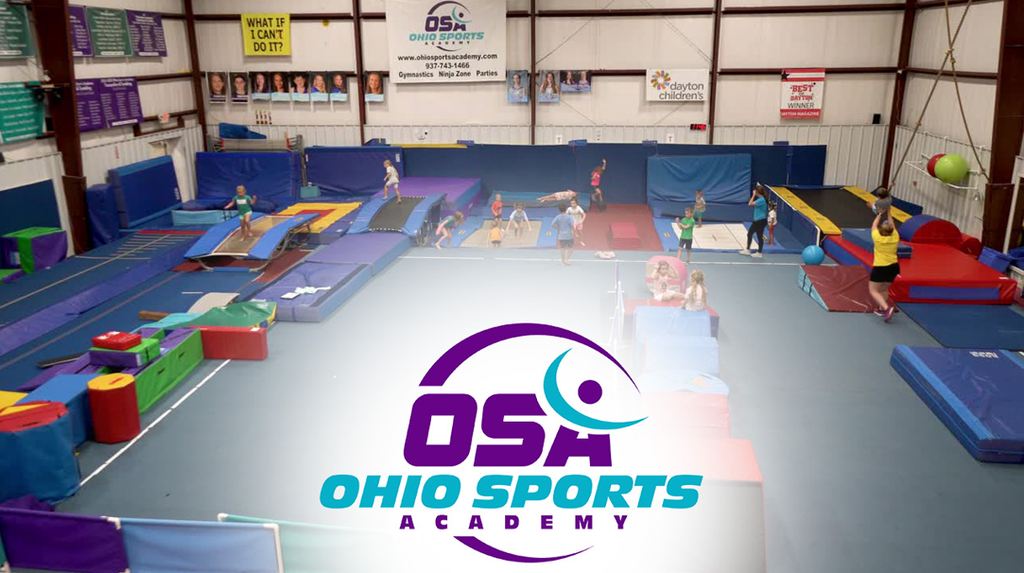
Families searching for an exceptional youth sports program often look beyond trophies or flashy facilities. The strongest programs tend to combine skilled coaching, age-appropriate progressions, a welcoming environment, variety, cleanliness, and opportunities for children to grow at their own pace. Ohio Sports Academy in Springboro, Ohio, brings those qualities together through a broad lineup of gymnastics and movement-based programs for children, teens, and adults.
The academy currently offers tumbling, preschool gymnastics, Ninja Zone, aerial arts, adaptive gymnastics, trampoline, cheer jumps and motions, private lessons, open gym opportunities, and competitive teams. Its website also notes that readers of Dayton Ohio Magazine have voted it Best Gymnastics Facility for eight consecutive years. That is a regional recognition rather than a national ranking, but it gives families a factual benchmark when considering what helps a youth sports facility stand out.
A Strong Gymnastics School Starts With a Clear Mission
A respected youth program needs more than equipment. It needs a philosophy that helps coaches, families, and students understand what the experience is supposed to accomplish. Ohio Sports Academy states that its mission is to encourage students to reach their maximum potential in a healthy and supportive environment, regardless of athletic ability or goals.
That emphasis matters because children enter gymnastics for many different reasons. Some want to learn a cartwheel or back handspring. Others are preparing for cheer, dance, or competitive training. Some simply need an active outlet where they can build confidence, coordination, and strength. A well-designed program should leave room for each of those goals instead of assuming every child is headed toward the same destination.
The academy also frames learning around approaching challenges, building confidence, and celebrating success. Families comparing a gymnastics school can use those principles as practical criteria: look for clear expectations, appropriate challenge, supportive coaching, and a program structure that recognizes progress at different levels.
Progressive Classes Give Students Room to Build Real Skills
Gymnastics is built on progression. Advanced movements depend on fundamentals, so students benefit from learning skills in a sequence rather than being rushed toward the most impressive-looking trick.
Ohio Sports Academy uses progression-based instruction across several programs. Its tumbling classes begin with fundamentals such as cartwheels, round-offs, forward and backward rolls, backbends, and tick-tocks. Students move into higher levels as required skills become consistent. The current tumbling structure requires specific prerequisites for advancement, helping coaches build more difficult movements on an established base.
That approach extends beyond tumbling. The academy’s Ninja Zone program uses a 10-level mastery system organized around Gymnastics, Parkour, Tricking, and Warrior skill areas. Preschool classes also progress from grown-up-assisted participation toward greater independence and eventually a transition into the larger gym.
For children, a progression system can make a big goal feel less intimidating. A back handspring does not have to be one giant leap from beginner to advanced. Students can work first on body position, strength, flexibility, hand support, confidence, and prerequisite movements.
Program Variety Helps Different Athletes Find Their Place
One sign of a versatile youth sports facility is the ability to serve different interests without abandoning strong movement fundamentals. Ohio Sports Academy offers multiple program paths, which can help families find an activity that suits a child’s personality and motivation.
Tumbling appeals to students who enjoy technical skill progressions. Ninja combines obstacle-course training with gymnastics, martial arts, parkour-style movement, and freestyle challenges. Aerial arts introduces apparatuses such as silks, hammock, hoop, trapeze, and straps. Cheer Jumps & Motions focuses on refining school-cheer jumps and motions while also incorporating flexibility, conditioning, and strength.
The academy also offers adaptive gymnastics for children age three and older who may benefit from a more individualized approach to movement and learning. Its published program information references developmental delays, attention challenges, autism, sensory issues, coordination difficulties, and fear of movement among the needs the class may support.
Ohio Sports Academy describes its programs as being designed to build students up from babies through adults, with options for recreational participation, skill development, special interests, and competitive pathways.
That flexibility can be especially helpful during childhood, when interests and confidence can change quickly. Families can explore formats while children continue developing movement fundamentals, giving students more than one way to stay active, challenged, and excited about learning.
A Child-Friendly Environment Can Matter as Much as the Program List
Families often judge a youth facility by what happens between the headline features. Is the space clean? Do students receive attention? Does the environment feel welcoming? Are children encouraged when a skill is difficult?
Ohio Sports Academy describes its facility as child-friendly and says it uses an extensive daily cleaning process. Its homepage also emphasizes low coach-to-student ratios, a clean environment, and confidence-centered instruction. Those details help explain why the day-to-day experience matters alongside the specific skills being taught.
The academy has operated in its current family-owned form since 2010, when the Trifiro family purchased the facility after having been clients there. Its history at the location extends to 1997 under earlier ownership and names.
A family-owned structure does not automatically make a gym better, just as a large facility does not automatically make one impersonal. What matters is how the organization translates its values into consistent coaching, communication, and student experience.
Parents can look for whether coaches break skills into understandable steps, whether students seem engaged, and whether the atmosphere allows children to make mistakes without feeling embarrassed. Athletic learning involves repeated attempts, and a supportive environment can make those attempts easier to sustain.
Recognition Means More When It Reflects Everyday Quality
Claims about being the “best” should always be handled carefully. There is no single universal ranking that identifies one gymnastics school as the best in the entire United States. Families should be cautious about any national superlative that is not tied to a clearly identified award or ranking system.
Ohio Sports Academy does have a documented regional distinction: its current homepage states that Dayton, Ohio Magazine readers have voted it Best Gymnastics Facility eight years in a row. That recognition is meaningful because it reflects repeated local support, but it should be described accurately as a Dayton-area honor rather than a national title.
For families, awards can be one piece of the decision, not the entire decision. Program variety, coaching structure, cleanliness, progression systems, class fit, and the child’s own experience are more useful when considered together.
The best school for one student may also be different from the best fit for another. A competitive athlete may prioritize advanced training, while a preschool family may care most about age-appropriate instruction and independence. A child interested in aerial arts or ninja may value a facility with options beyond traditional gymnastics.
A Standout Youth Sports Program Is Built One Student at a Time
Ohio Sports Academy offers many of the qualities families commonly look for in a strong gymnastics and movement program: progressive instruction, multiple class options, a child-focused mission, adaptive programming, competitive opportunities, and a documented record of regional recognition.
Its range also shows why the idea of the “best” gymnastics school is more useful when it is connected to specific qualities instead of treated as an unsupported national claim. A facility stands out when students can start at an appropriate level, understand what they are working toward, receive coaching that supports development, and find new challenges as their interests evolve.
For families, the most important evaluation happens at the individual level. Does the child enjoy attending? Are skills being taught progressively? Is confidence growing alongside physical ability? Does the program feel sustainable within family life? Those questions reveal more than a slogan ever could.
A strong gymnastics school creates room for both ambition and enjoyment. Some students may eventually compete, while others may simply gain strength, coordination, persistence, and a positive relationship with movement. When a program can support both paths, it becomes more than a place to practice skills. It becomes an environment where children can keep discovering what they are capable of doing next.