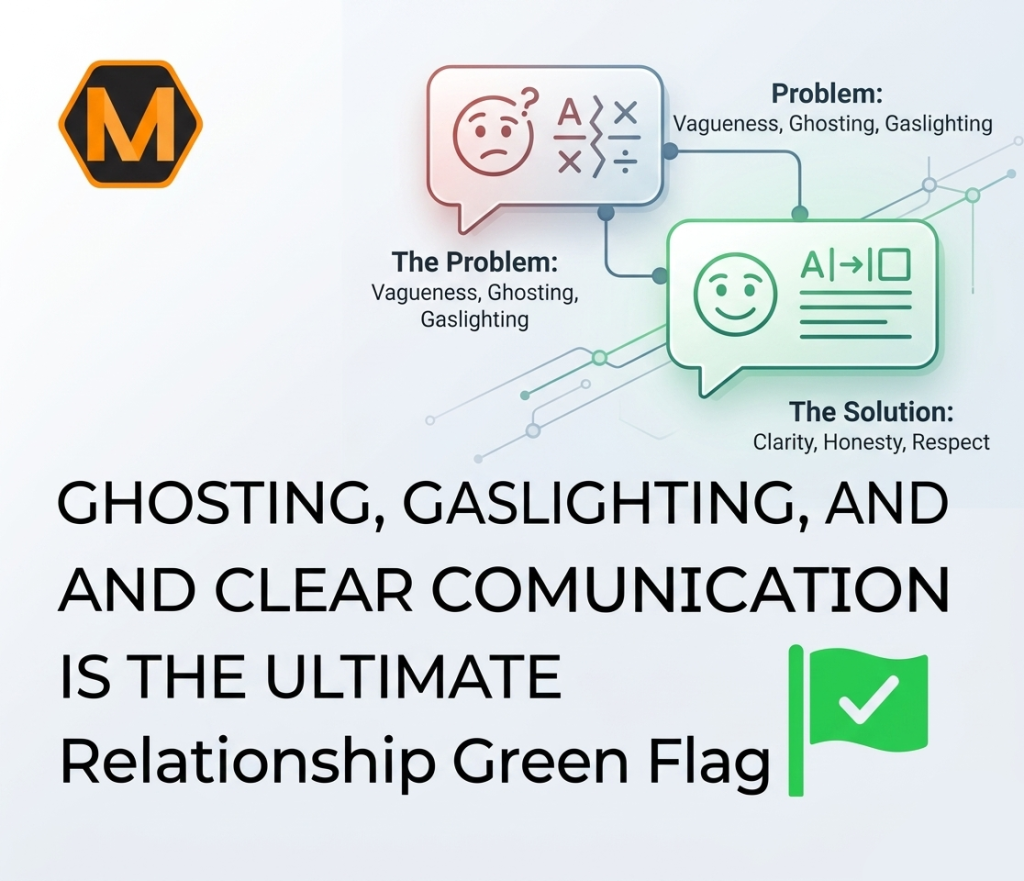
In the modern dating landscape, the vocabulary has shifted significantly. We no longer just “break up” or “stop calling”; we navigate a minefield of psychological trends like ghosting and gaslighting. While these terms describe painful experiences, they all share a common root: a breakdown in honest, transparent communication. As we move through 2026, a new trend is emerging among college students and young professionals. People are looking for “Green Flags”—those positive traits that signal a healthy, long-term connection. Surprisingly, one of the most significant green flags isn’t how many interests you share or your taste in music, but how clearly you communicate, right down to your grammar.
Clear communication is more than just avoiding “u” instead of “you.” It is about the effort you put into being understood and understanding others. When a person takes the time to articulate their thoughts without ambiguity, it builds an immediate foundation of trust. This level of precision is similar to what one expects from professional letter writing services at myassignmenthelp, where the goal is to convey a specific message with absolute clarity and zero room for misinterpretation. In a relationship, using clear syntax and thoughtful language shows that you value the recipient enough to be precise. It proves that you aren’t hiding behind vague “situationship” jargon, but are instead choosing to be an active participant in the dialogue.
The Psychological Toll of Vague Language
Ghosting is perhaps the ultimate form of “low-effort” communication. It is a total silence that leaves the other person to fill in the blanks with their own anxieties. Similarly, gaslighting relies on the manipulation of language to make someone doubt their own reality. Both of these “Red Flags” thrive in the shadows of ambiguity. When someone uses vague “we’ll see” or “maybe later” phrases to avoid commitment or confrontation, they are creating a power imbalance that leaves the other person feeling insecure.
On the flip side, a “Green Flag” communicator uses language as a bridge, not a barrier. They understand that a well-structured sentence is a sign of a well-structured thought. By being specific about their feelings and intentions, they eliminate the need for the other person to “mind-read.” This reduces the stress and “cognitive load” that often plagues early-stage dating, allowing the relationship to grow on a bedrock of transparency.
Breaking Down the Communication Spectrum
To understand why clear communication is such a high-value trait, we have to look at how different styles impact the emotional health of a partnership.
| Feature | The Red Flag (Ghosting/Gaslighting) | The Green Flag (Clear Communication) |
| Response Time | Erratic or non-existent (Ghosting) | Consistent and predictable |
| Clarity | Intentionally vague or contradictory | Direct and specific |
| Accountability | Deflects blame or denies reality | Takes ownership of feelings/actions |
| Grammar/Tone | Careless, dismissive, or aggressive | Thoughtful, respectful, and clear |
| Goal | To avoid discomfort or exert control | To build understanding and connection |
Why Grammar is a “Green Flag” in 2026
You might wonder why grammar matters in a world dominated by emojis and voice notes. The truth is, grammar is the “architecture” of meaning. A misplaced comma or a confusing tense can change the entire sentiment of a message. In the digital age, your written word is often your first impression and your primary way of maintaining a bond.
- Respect for the Recipient: Taking thirty seconds to proofread a text shows you aren’t just “firing and forgetting.” It shows you care about how your words land on the other person.
- Intelligence and Articulation: Being able to explain a complex feeling through words is a high-level skill. It shows that you have high emotional intelligence (EQ).
- Reliability: Consistency in how you communicate—using proper capitalization and clear sentences—often translates to consistency in how you act. If you are sloppy with your words, people may assume you are sloppy with your commitments.
When someone can navigate the nuances of a deep conversation without resorting to manipulative buzzwords, they show a high level of mental maturity. This is a skill that takes practice, much like the focused discipline required by a nursing dissertation writer who must maintain professional standards while handling sensitive, complex data. Mastering the art of articulation ensures that your “Green Flag” status isn’t just a temporary act, but a core part of your personality that benefits every area of your life.
The “Anatomy” of a Green Flag Message
If you want to practice clear communication, you need to understand what a “Green Flag” message actually looks like. It isn’t about being overly formal or sounding like a textbook; it’s about being “Human-Centric.”
- The Hook of Honesty: Start with the truth, even if it’s uncomfortable.
- The Context: Provide enough detail so the other person doesn’t have to guess.
- The Forward Motion: End with a question or a suggestion to keep the dialogue healthy.
For example, instead of ghosting someone because you are busy, a Green Flag communicator says: “Hey, I’ve had a really overwhelming week at work and I don’t have the social energy to chat right now. Can we check in again on Tuesday when I’m more present?” This message uses perfect grammar, clear intent, and provides a timeline. It leaves zero room for the other person to feel gaslit or ignored.
Beyond the Text: The Logic of Logical Communication
Clear communication isn’t just about the words; it’s about the logical flow of the relationship. In a healthy partnership, discussions follow a “Problem-Process-Resolution” path. Gaslighting disrupts this flow by attacking the “Process”—making you question the facts of what happened. A Green Flag partner, however, sticks to the structural logic of the conversation. They address the point at hand, stay on topic, and work toward a mutual understanding rather than “winning” the argument.
This structural logic is what makes a person feel “safe.” When you know that your partner will communicate their needs clearly and listen to yours without twisting the narrative, the relationship becomes a “safe harbor” rather than a source of constant stress.
How to Improve Your Communication “Green Flags”
If you want to stand out in a sea of “low-effort” daters or colleagues, you can start by refining how you present your thoughts. Here are a few ways to upgrade your communication style starting today:
- Avoid “The Vague-Out”: Instead of saying “I’m busy,” try “I have a lot on my plate until Thursday, but I’d love to catch up then.” Specificity kills anxiety and prevents the other person from feeling ghosted.
- The 24-Hour Rule: If you are upset, take time to write down your thoughts before hitting send. Seeing them on a screen helps you spot “gaslighting” tendencies in yourself or gaps in your own logic.
- Ask for Clarity: If someone is being vague with you, ask: “I’m not sure I understand what you mean by that. Can you explain it differently?” This forces the conversation out of the “Red Flag” zone and into a place of clarity.
- Audit Your Grammar: While you don’t need to be a linguist, using full sentences and clear punctuation in important conversations shows that you are present and serious.
The Conclusion: Investing in Your “Voice”
As we move further into a world where AI-generated content and automated responses are everywhere, the “Human Voice” becomes the most valuable asset you have. Whether you are writing a heartfelt letter, a professional email, or a simple text to someone you care about, the effort you put into your grammar and clarity is a direct reflection of your character.
The “Green Flag” of clear communication isn’t just about being “nice.” It’s about being brave enough to be seen and clear enough to be understood. Ultimately, ghosting and gaslighting are the hallmarks of someone who is either unwilling or unable to handle the responsibility of a real connection. By choosing to be a clear, honest, and grammatically conscious communicator, you aren’t just avoiding being a “Red Flag”—you are becoming the ultimate “Green Flag” that everyone is searching for in 2026. Clear writing is clear thinking, and clear thinking is the secret to a relationship that lasts.
Frequently Asked Questions
How does grammar affect my dating life?
\ In digital communication, grammar acts as a signal of effort and respect. Taking the time to use correct punctuation and clear sentences shows that you are intentional about being understood, which builds trust and displays high emotional intelligence.
What is the connection between vague language and gaslighting?
Vague language creates ambiguity that can be used to manipulate or avoid accountability. By being intentionally unclear, a person can later deny previous statements, whereas precise communication provides a factual “paper trail” that protects both parties from confusion.
Why is clear communication considered a “Green Flag”?
It indicates maturity and a willingness to be vulnerable. When someone communicates their needs and boundaries directly, it eliminates the stress of guesswork, reduces anxiety, and proves they have the skills to resolve conflicts healthily.
Can improving my writing style help prevent ghosting?
While you cannot control someone else’s actions, being a clear and engaging communicator often fosters a deeper connection. Setting specific expectations for follow-ups and expressing yourself clearly makes it easier for others to engage with you honestly.
About The Author
Thomas Taylor is a seasoned communication consultant and lead researcher at myassignmenthelp, where he focuses on the intersection of linguistics and interpersonal dynamics. With a background in structural analysis and professional writing, Thomas helps individuals and students navigate complex communication challenges with clarity and precision.