In the fast-paced world of online communication, acronyms and shorthand expressions dominate chats, social media, and messaging apps.
One acronym that frequently appears in conversations is “TFW”. Many users encounter it in memes, Instagram captions, TikTok videos, and casual texts, yet they aren’t always sure what it means.
Understanding TFW meaning in text is crucial for keeping up with digital trends and ensuring smooth communication online.
While seemingly simple, TFW carries emotional weight, often conveying a feeling or reaction in just three letters.
People search for its meaning because misinterpreting it can lead to confusion or missing the intended tone.
This article breaks down TFW, explores its origins, and provides practical examples across different contexts to help you confidently recognize and use it.
Meaning & Definition
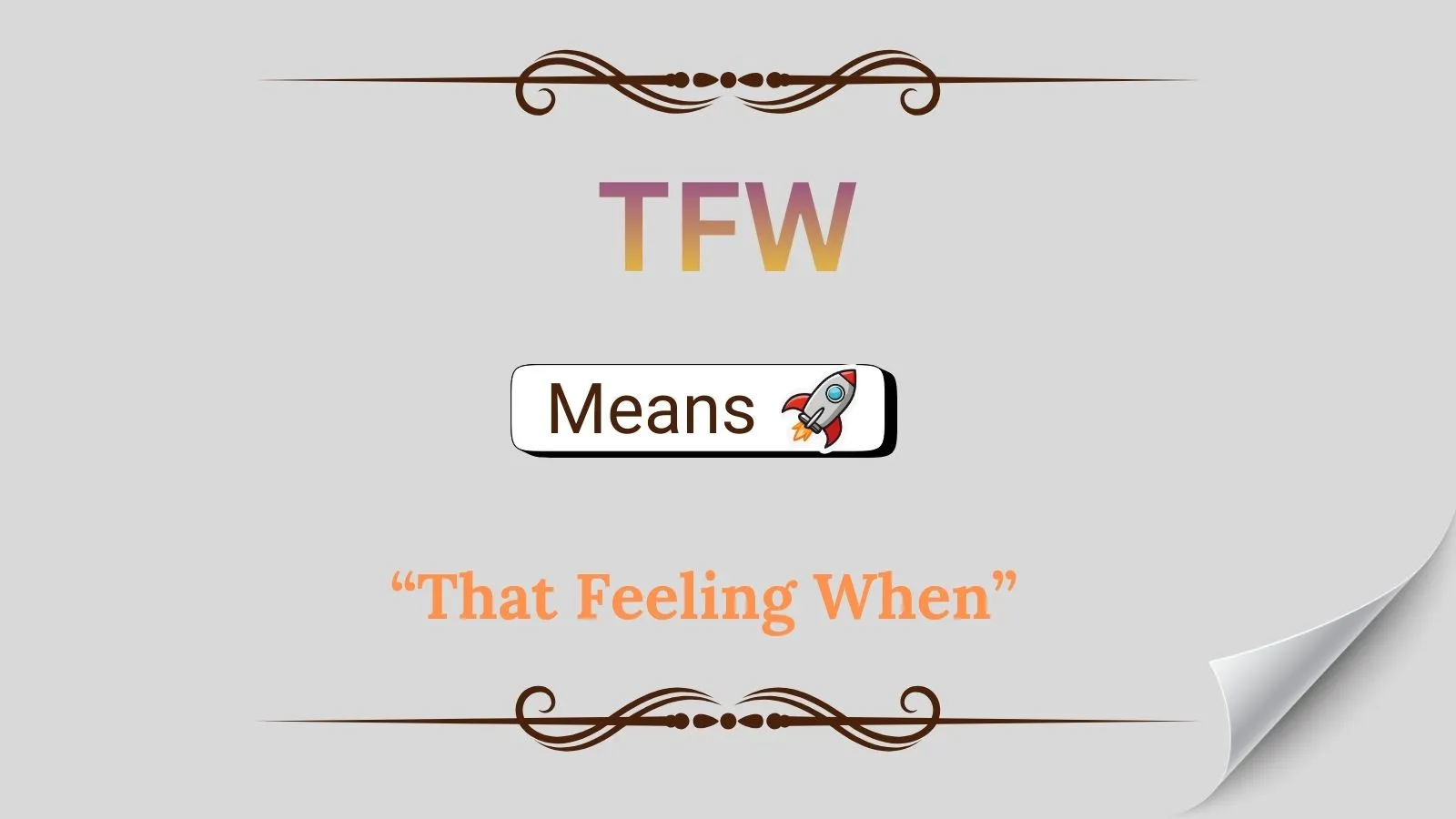
TFW stands for “That Feeling When”. It is used to express a relatable emotional reaction to a specific situation, event, or thought.
Essentially, it serves as a shorthand for conveying a moment’s sentiment without needing a full sentence. For example, someone might write:
TFW you find money in your old coat pocket.
Here, TFW communicates the excitement and surprise of an unexpected discovery. The beauty of TFW lies in its ability to capture complex emotions in a concise, relatable way.
It’s versatile, simple, and resonates strongly in digital communication where brevity is key. While most commonly associated with humor, joy, or nostalgia, TFW can also express sadness, frustration, or irony depending on the context.
Background
The acronym TFW gained popularity in early internet forums, meme culture, and imageboards.
Its rise coincided with the growth of social media platforms like Tumblr, Reddit, and later Instagram and Twitter.
Meme creators frequently paired TFW with images that visually illustrated the emotion being expressed, turning it into a staple of relatable online content.
Over time, TFW evolved from niche internet slang to mainstream usage, appearing in casual texts, TikTok captions, and even marketing content.
Its growth highlights how the internet has shaped modern language, emphasizing emotion and relatability over formal grammar or structure.
Usage in Different Contexts
Chat, WhatsApp, Instagram, TikTok
On messaging apps and social media, TFW is used to react to everyday experiences. Users often pair it with an image, GIF, or short video. For example:
- WhatsApp: TFW you realize it’s Friday!
- Instagram: TFW the weekend finally arrives 😎
- TikTok captions: TFW your pet does something hilarious
It allows people to share emotions quickly, making conversations more expressive without lengthy explanations.
Professional Fields
While less common in professional communication, TFW occasionally appears in casual internal emails or social channels within organizations to add humor or relatability.
Its informal nature means it is rarely used in official reports or formal discussions, but it can help humanize workplace communication among colleagues.
Meaning in Physics, Medical, and Aircraft Terminology
Outside casual text, TFW can have specialized meanings:
- Physics: Sometimes shorthand for Time-Frequency Window, referring to a segment in signal processing analysis.
- Medical: Can denote Total Fetal Weight in obstetrics research contexts.
- Aircraft: Occasionally used to mean Takeoff Weight, critical for flight calculations.
These professional uses are context-dependent and typically confined to technical documents, showing that acronyms can vary widely across disciplines.
Common Misconceptions
Many users mistakenly interpret TFW as a greeting or command, confusing it with other acronyms like “TFH” or “FWB.”
Unlike these, TFW is not interactive; it’s expressive. Misunderstanding TFW can lead to awkward or mismatched reactions in online conversations.
Another misconception is that it always signals happiness, when in reality, it can reflect any emotion depending on the scenario.
Similar Terms & Alternatives
Other acronyms expressing feelings include:
- SMH – Shaking My Head (disbelief)
- FML – F*** My Life (frustration)
- IDC – I Don’t Care (indifference)
- Mood – Often used in place of TFW in memes
These alternatives share the goal of summarizing emotional responses but differ in tone and context.
How to Respond to It
Responding to TFW depends on the emotion conveyed:
- Humor: Reply with laughter emojis or a relatable anecdote.
- Sadness: Express empathy with supportive comments.
- Surprise/Excitement: Acknowledge or react with enthusiasm.
The key is mirroring the emotional tone rather than replying literally.
Differences from Similar Words
Unlike LOL, OMG, or BRB, which describe actions or reactions, TFW describes a feeling associated with a specific situation. It is more narrative than exclamatory, often requiring context to fully understand its meaning.
Relevance in Online Conversations & Dating Apps
On dating apps and social platforms, TFW enhances relatability and humor. Profiles often use it to share quirky experiences, hobbies, or emotional reactions, making it easier to connect over shared feelings.
Its use signals casualness, approachability, and a sense of modern digital literacy.
Conclusion:
TFW meaning in text is a testament to how digital communication continues to evolve. This simple acronym captures complex emotions succinctly, bridging text, visuals, and memes to make online conversations more expressive and relatable.
If used in memes, chats, or social media captions, understanding TFW helps decode modern internet culture while enabling users to communicate feelings effectively.
From casual humor to subtle irony, TFW remains a versatile tool for emotional expression in the digital age, making it a must-know acronym for anyone navigating online interactions.

I’m Mark Twain, author at GrammarsGuide.com, where I create clear, simple, and practical writing content.
I use my know-how to make tricky English rules easy to understand and useful in everyday writing.